Gerald V. Richardson
L & F Training Center Office
Recruiting & Career Development
Virginia Beach, Virginia 23455
Office:
079 2636 8407
Email:
admin@cnrealestate.com
Home » Articles posted by Dung Sweatt (Page 4)

L & F Training Center Office
Recruiting & Career Development
Virginia Beach, Virginia 23455
Office:
079 2636 8407
Email:
admin@cnrealestate.com


We’re #1 in Sales because we’re #1 in Service.
If you have a home to sell or if you are in
the market to buy, call #1. . . Long & Foster…

You may have heard the terms “inlays” and “onlays” from your dentist and wondered what they mean. Simply stated, they are a dental care treatment to repair cavities, tooth decay, wear from bite force, tooth trauma, and small fractures.
Inlays and onlays are similar to filings and crowns, but differ in the following ways:
An inlay replaces decayed tooth enamel. Once your cavity is removed, your dentist places your inlay on the chewing surface of your tooth. Your inlay is custom designed to fit the area between tooth cusps. Inlays are created using an imprint of the affected areas and are manufactured in a dental lab. This means they provide greater strength because they fit your teeth perfectly. Inlays are also better at preserving as much of your natural tooth as possible.
Inlays are made from tooth colored ceramic, porcelain or a composite material that is stronger than traditional fillings. Porcelain in particular can be perfectly matched to the color of your teeth. Porcelain naturally bonds to teeth. This bonding process improves the strength of your tooth.
There are many benefits of inlays compared to fillings:
Inlays have a few disadvantages in comparison to fillings. When choosing between the two, you and your dentist should take the following into account:
Onlays are recommended when a cavity is too big to fill, but too small for a Crown. Onlays are also called partial crowns. This is because they cover a portion of the tooth. Onlays are placed to preserve natural tooth structure.
Onlays are custom manufactured in a lab. Our onlays are made of porcelain from an exact imprint of your teeth. The porcelain naturally bonds with your tooth to add strength. The porcelain used in both inlays and onlays is perfectly color-matched to your surrounding teeth.
Onlays and crowns differ in size and location. Crowns are an excellent restorative solution when significant wear or decay has occurred. They either extend down the sides of your tooth or cover the tooth. Onlays are smalle. They fit over the biting surface of your tooth and extend to cover the cusps.
Dental professionals often recommend an onlay to:
If you’re not sure whether you need inlays, onlays, crowns or fillings, we encourage you to reach out to a dental professional for a consultation! Alternatively, click the link below if you’d like to learn more about the services and procedures involving inlays and onlays!

Sinuses are spaces in your skull. They warm and moisten the air so that they are fit for you to breathe in. The largest sinuses, called the maxillary sinuses, are above your upper molar teeth. When the maxillary sinuses are infected, they can also affect the closest areas, such as your upper molars.
Sinusitis causes tooth pain in two ways:
No, a sinus infection cannot cause tooth infection. However, a tooth infection can spread to the sinuses and cause sinusitis. Dental infections can cause 40% of chronic sinus infections.
The maxillary sinuses are above the upper molars, making them less likely to cause tooth pain in the front teeth if the sinuses are infected. We advised that you schedule an appointment with your doctor to learn more.
Sinuses produce mucus to keep the air moist and prevent the inside of your nose from drying out. If the sinuses are irritated or infected, they can swell and get congested, causing pain in the upper molars.
Together with sinusitis signs and symptoms, the most common symptom of sinusitis tooth pain is toothache on more than one adjoining upper molars. The pain is not localized on one tooth.
Another common symptom is pain aggravated by movement. Movement like jumping up and down can aggravate sinus tooth pain. Pain can also be aggravated by bending over or lying down. The motions can cause congested sinuses to press on the roots of the molars with more force. Meanwhile, lying down can lessen the pain.
It would depend on the severity of your sinusitis. Since sinus tooth pain appears more in acute sinus infection, said symptom can last up to ten days.
Since the congested mucus promotes germs that cause sinusitis, the goal is to decongest. Here are remedies you can try at home:
Hydrate
drinking fluids can help thin the mucus and promote drainage to the nasal cavity.
Warm Compress
A warm compress over the sides of the nose can warm the sinuses and loosen mucus.
Steaming
Breathing in the steam of a bowl of hot Water or a hot shower can loosen mucus. The warm, moist steam can soothe irritated nasal passages and make breathing easier.
Sinus Flushing
Flushing your sinuses with warm or room-temperature saline solution can help moisturize the lining of your sinuses. It can also loosen mucus and clear nasal cavities.
Decongestants
Decongestants can help relieve symptoms. Topical decongestants shouldn’t be used for more than seven days as they can cause symptoms to worsen. The same can happen when using decongestant nasal sprays for over three days.
Cold compress
A cold compress on the painful area for 10-15 minutes several times daily can numb tooth pain.
Over-the-counter Pain Relievers
You can take OTC pain medications such as acetaminophen or numbing gels to treat sinusitis Dental pain.
Since most sinus infections get better Without antibiotics, antibiotics are only prescribed by the doctor if other treatments don’t work, and they suspect bacterial infections. Antibiotics are only prescribed when other medications don’t work because they can cause mild to rash side effects, from rashes to severe allergic reactions.
While you may need to consult your dentist to confirm if you have sinus or dental-related tooth pain, please schedule an appointment with your doctor if you experience any of the symptoms:
If you’re looking for sinus relief or interested in learning more about sinus surgery, click the link below!
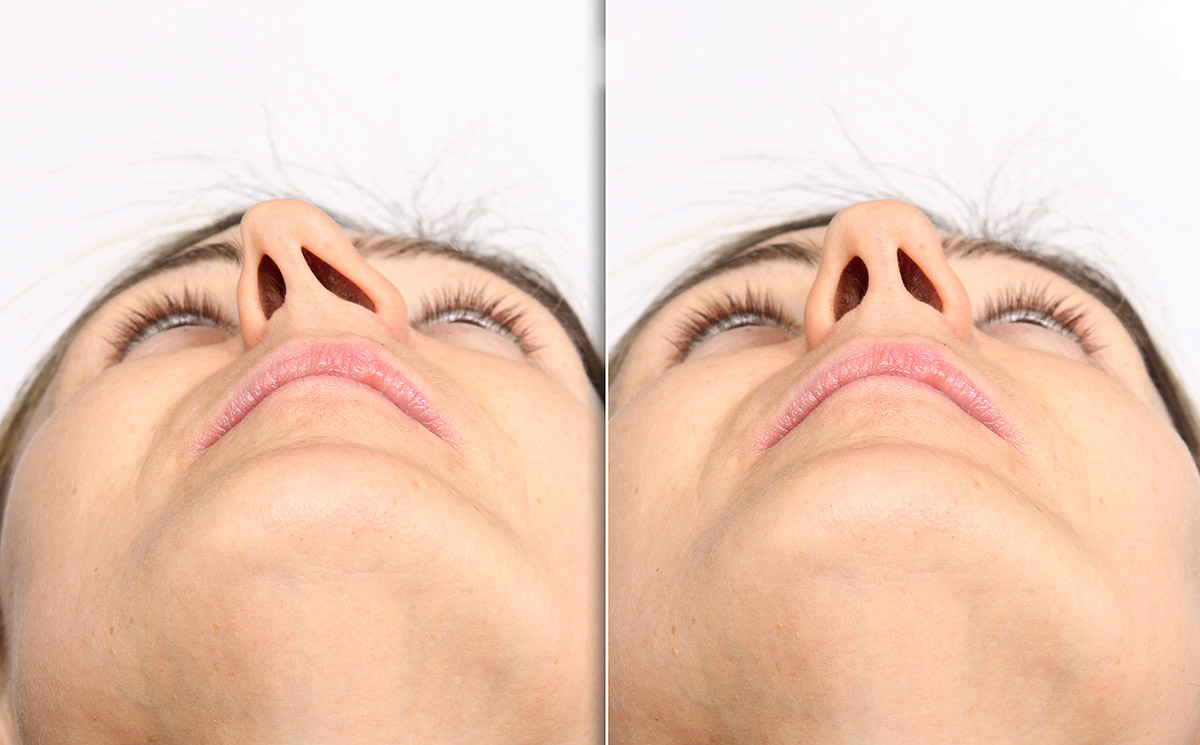
A septum in a deviated septum is the nasal septum or cartilage that divides the inside of your nose into the left and right chambers.
When the septum deviates from its midline, it causes congestion and difficulty breathing in the smaller chamber. It also causes drying, crusting, or bleeding in the larger chamber.
Most people have deviated septums that cause no to minor symptoms. However, there are causes of deviated septums that can cause significant symptoms. The following causes are:
Congenital
The deviated septum can have developmental causes. It can occur at birth due to genetic factors such as hereditary connective tissue diseases.
Nose Injury
The deviated septum can also come from traumatic causes. An injury can cause the nasal septum to be displaced to either side. It can happen due to falls, fights, contact sports, automobile incidents, or rough playing. Nasal injuries can also occur in babies due to difficult childbirth.
Aging
A deviated septum is a common condition. As a person grows, the nasal septum can grow to one side than the other.
A deviated septum can have severe symptoms affecting a person’s everyday life.
The wider chamber of the nose, caused by a deviated septum, is more exposed to air. This exposure can lead to nasal drying, leading to nose bleeds.
The more constricted chamber, caused by a deviated septum, can result in nasal congestion. The following complications occur with nasal congestion:
If your symptoms above do not respond to home remedies or over-the-counter medication, you may want to see a doctor to be healthier and live more comfortably. Furthermore, symptoms such as chronic nasal congestion, recurring sinus infections, and frequent nosebleeds require medical consultation.
To diagnose if a person has a deviated septum, your healthcare provider will review your medical history and do a physical examination. If further examination is needed, they may do the following procedures:
First, they apply a decongestant spray with lidocaine to prepare your nasal cavity. Lidocaine helps the patient’s comfort with its numbing properties alongside topical anesthesia.
Then, they will use an extended tube scope attached with a bright light and a small camera to look inside. The tube would be connected to a monitor screen.
At the end of the procedure, they will remove the tube and apply a decongestant spray to the nasal cavity again.
If needed, your healthcare provider may recommend a CT scan of the nose. The imaging test can determine the seriousness of the deviated septum and the severity of the symptoms.
After the diagnosis, you may be referred to a sinus surgeon or an ENT specialist.
If medical therapy does not alleviate the symptoms you’re experiencing, surgery to correct the deviated septum can be recommended.
Septoplasty involves repositioning and aligning the nasal septum to the center of the nose. With nasal septum correction, the patient can benefit by having proper airflow inside the nasal cavity to alleviate symptoms.
Depending on the severity of the condition, the surgery can be an outpatient or inpatient procedure that lasts 1-2 hours. In some cases, a surgeon may recommend sinus surgery to minimize sinus infections or rhinoplasty to reshape the nose.
If you are experiencing chronic sinus disease or nasal obstruction, your healthcare provider may refer you to a sinus surgeon. As the only Fellowship-trained Rhinologist and Endoscopic Skull Base Surgeon worldwide, Amy Anstead, MD, FARS, provides surgical solutions and state-of-the-art techniques to alleviate severe symptoms people experience from deviated septums.
At Puget Sound Sinus Center, we aim to provide personalized, holistic, patient-centered care for maximum comfort and healing.
A deviated septum can cause a domino effect of symptoms that can interfere with your breathing, sleeping, and health. Having performed thousands of successful complex sinus surgeries, Dr. Anstead has treated patients to a better Quality of life around the globe. If you’d like to learn more About deviated septums or other sino-nasal surgeries, click the link below!
The idea of flexible work is not just a futuristic concept, but a current reality. As businesses adapt to the shifting times, grasping the nuances of flexible work has turned into progressively pertinent. This write-up seeks to shed light on just what hybrid remote is, its pros, cons, and ways to optimize this employment model.
Hybrid Remote is a versatile employment model that permits employees to divide their time among being in the office and working remotely. Unlike conventional work models that necessitate physical presence or telecommuting that is entirely off-site, hybrid remote offers the best of both worlds.
One of the largest benefits of flexible work is the enhanced work-life balance it provides. Staff can handle their schedule more efficiently, permitting for a healthier mix of career and personal endeavors. The control over hours and location also leads to lowered burnout and increased productivity.
However, the flexible work system is not without its challenges. The requirement for the appropriate resources to enable effective remote work is essential. Employees may also feel isolated to the organization’s ethos when they are not physically present.
Whenever it pertains to how flexible workers spend their time, the concentration changes according to the location. On-site, duties are usually reserved for tasks that need profound collaboration, resource usage, and making connections.
To make hybrid work efficient, both equally bosses and workers require to be deliberate regarding how exactly time is allocated in each and every workplace.
Hybrid work is not going anywhere, and grasping its nuances is {essential|crucial|
References:
https://flowscapesolutions.com/blog/what-is-hybrid-working
https://www.gallup.com/workplace/398135/advantages-challenges-hybrid-work.aspx